Common questions
Questions people ask before they start
If yours isn't here, the free intro call is a good place to ask it. Nothing is a silly question.

Still unsure?Fifteen minutes on the phone usually answers more than any page can.Book a free intro call
Getting started
A relaxed 20‑minute phone or video call. You tell me a little about what is going on, I explain how I work, and we see if it feels like a good fit. There is no obligation to continue, and no pressure to decide on the call.
If something is affecting your life, it is enough. You don't need a diagnosis or a crisis to come to therapy. Most people wait far longer than they needed to.
We go through confidentiality and practicalities, then talk about what has brought you and what you would like to be different. By the end we usually have a rough shared sense of where to start. Nothing is expected of you except turning up.
Individual adults aged 18 and over. I don’t offer couples therapy or work with under‑18s, but I’m happy to point you towards someone who does.
No. You can contact me directly. If it would help, I am happy to liaise with your GP with your consent.
Use the booking link on the contact page to pick a time for the intro call, or send a message and I will reply within two working days.
Sessions & fees
£80 for a 50‑minute session, in person or online. Payment is by bank transfer before or on the day.
Weekly to begin with, which gives the work momentum. Many people move to fortnightly as things settle. We decide this together.
It depends on what you bring and can be hard to predict at the outset. We review together regularly so you are never locked in.
Please give 48 hours' notice to cancel or move a session. Sessions cancelled with less notice are charged in full, as the time has been held for you.
Yes. I am registered with Aviva, Vitality and Bupa. Check with your insurer what your policy covers, and whether you need a GP referral or authorisation code before your first session.
I am afraid at present I do not offer reduced‑fee sessions, but I am able to signpost you to services and therapists that do.
How I work
Cognitive behavioural therapy looks at how thoughts, feelings and actions feed each other, and finds practical places to interrupt the loop. It is structured, collaborative, and you leave with tools.
Exposure and response prevention is the leading treatment for OCD. We build a graded ladder together and climb it at your pace. Nothing is sprung on you, and you are in control of every step.
Yes. I am an accredited member of the British Association for Counselling and Psychotherapy (MBACP Accred, membership number 401198), with a Masters in Addiction Psychology and Counselling and further training in ERP and trauma‑focused CBT.
Yes, within the limits set by the BACP Ethical Framework and the law. I explain these clearly in the first session. I discuss my work anonymously in clinical supervision, which is standard practice.
Often there will be something small to try between sessions, because that is where change happens. It is always agreed, never imposed.
Possibly. It depends on what didn't work. Tell me in the intro call and I will be honest about whether my way of working is likely to be a better fit.
Practical & locations
Three rooms in London: St Joseph’s Hospice, Mare Street, Hackney E8 4SA; Unit 10, Print Village, 58 Chadwick Road, Peckham SE15 4PU; and 64 Grove Vale, East Dulwich SE22 8DT. All are a short walk from a station.
Yes, across the UK by secure video. The fee and approach are the same. Some people mix in‑person and online.
Yes. I see clients during weekday daytimes and evenings. Let me know what works for you in the intro call.
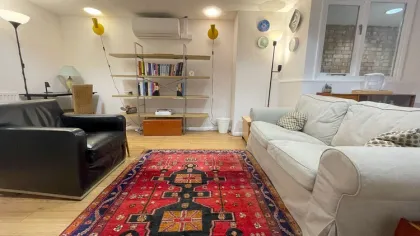
Each room is different. Please mention any access needs on your intro call and I’ll give you full details, or we can meet online.
Therapy is not an emergency service. If you are in immediate danger call 999. The Samaritans are free on 116 123 at any time, and you can text SHOUT to 85258.